
What the sea keeps.
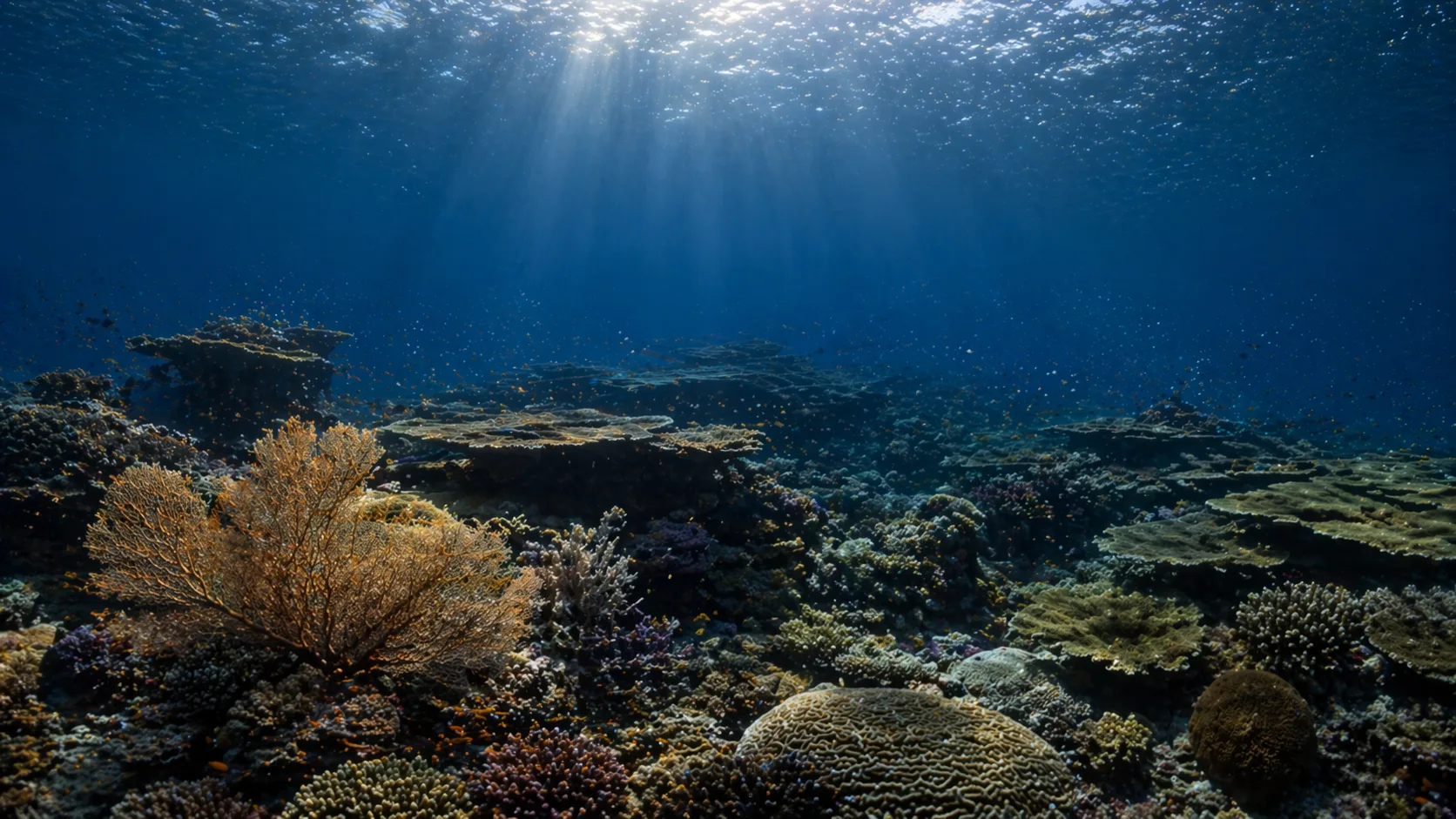
Reef.
Coral skeletons grow in annual bands, storing traces of water temperature, chemistry, and stress.
Reefs have built and rebuilt themselves for hundreds of millions of years.
A living reef is not scenery. It is an archive, still writing in calcium carbonate.
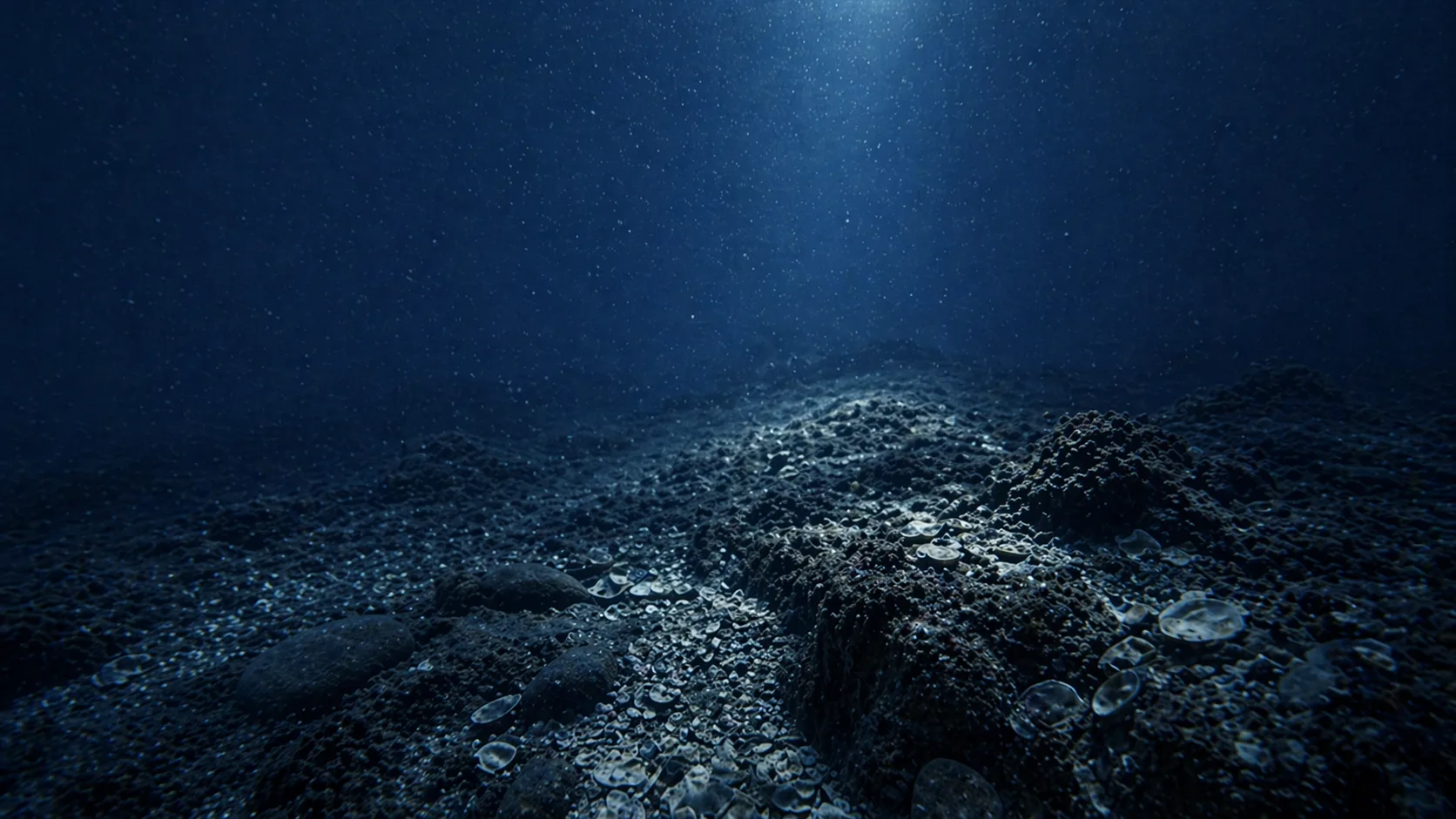
Drowned coastlines.
At the last glacial maximum, global sea level was about 120 meters lower than today.
Many shorelines people once walked are now submerged shelves, reef edges, and drowned caves.
Archaeology here follows the contour lines: hearths, middens, tools, and pottery below modern water.
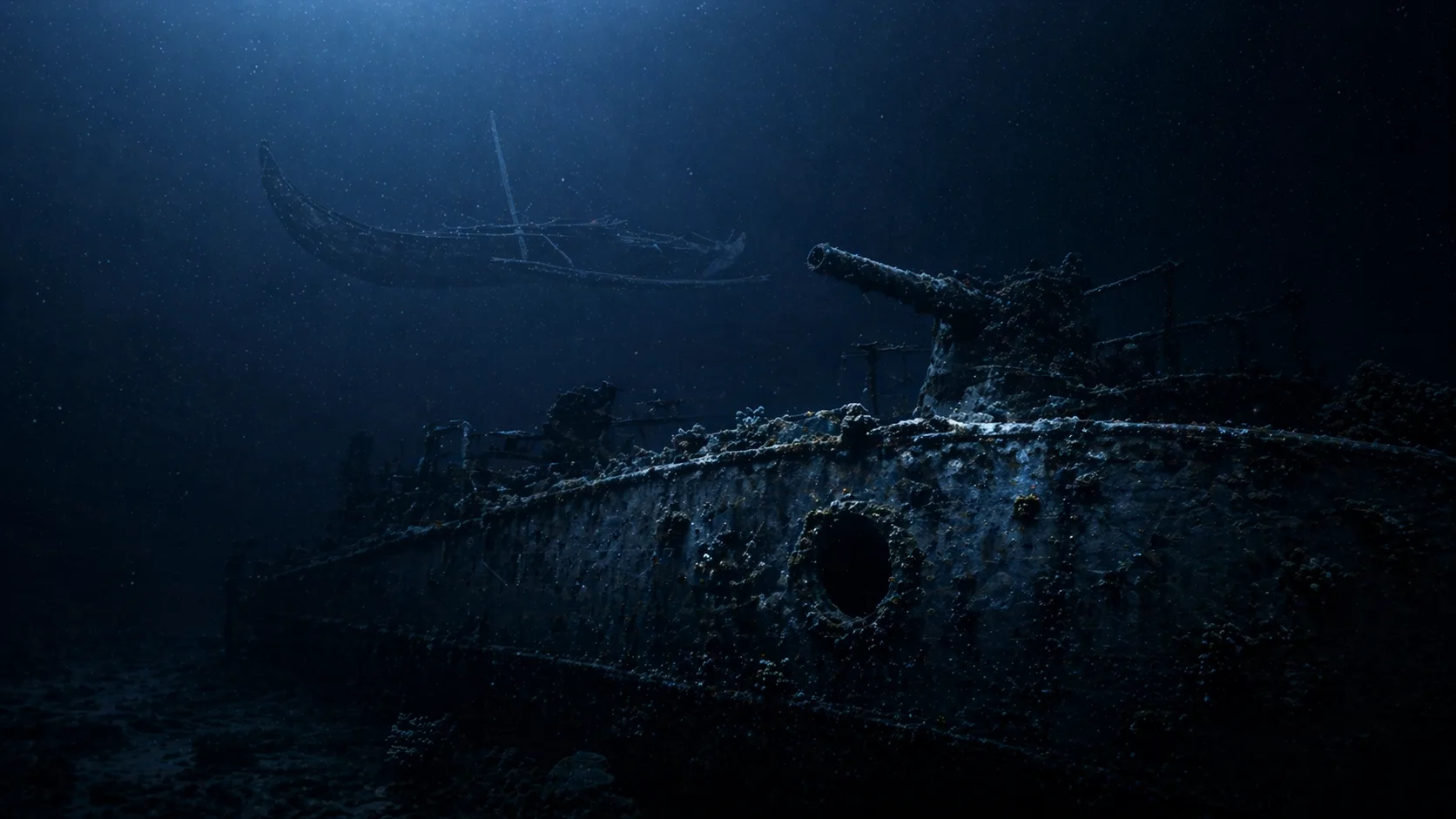
Artifacts.
Lapita navigators moved through the western Pacific about three thousand years ago, leaving dentate-stamped pottery across island chains.
At Chuuk Lagoon, Operation Hailstone sent Japanese ships and aircraft to the seafloor in February 1944.
The record is not one story. It is migration, war, trade, and weather, held in place by depth.
Volcanic flank.
Seamounts are volcanic mountains that rise from the seafloor without always breaking the surface.
Their slopes bend currents, gather life, and turn open water into shelter, hazard, and route.
WildBerry reads those forms practically: depth, lee, reef cap, current, and time.
Deep time.
The Pacific Plate moves northwest by inches each year, carrying islands away from their volcanic source.
Given enough time, high islands erode, reefs keep building, and old volcanoes become atolls, banks, and seamounts.
Depth and time meet here as terrain: a slow motion record under the hull.

Luxury exploration · Artfully guided
Arrive.
Access by invitation. Sign in with the credentials delivered to your owner, crew, guest, or researcher account.